After much reflection, cogitation and hesitation, I finally decided to share my novel as well as some of the ''better'' artworks on DeviantArt, the largest art platform online (that I know of). I'm still at my beginnings, editing and uploading existing chapters daily so as not to bring it on all at once. The edited chapters where I correct minor as well as major syntax, grammar and typo mistakes will also be uploaded onto FanFiction as soon as they're ready.
Check out my new DeviantArt page here: http://mearadechivanney.deviantart.com/
Tuesday, 5 January 2016

Saturday, 12 December 2015
The Four Ladies
I had a very strange and mysterious
dream last night.
I was in Link's body and I had just
slain a pack of bokoblins in an unknown town. This town looked as if
it was in real life, flat with modern houses and a slim river running
around it. There was a part of town that was supposed to be off-limit
to me, the player, and I had always been wondering what was in that
area. Only the river could take me to those houses, so that day, as I
beat the monsters, I decided to just give it a try with a tiny raft.
And it worked.
I stood on that makeshift boat,
stretching out my arms to the mild breeze ruffling through my hair as
the raft moved on its own along the river and past houses and people.
The first house I passed was big and expensive-looking, with a group
of old ladies sitting on the terrace having coffee and biscuits. They
were all excited to see a newcomer and were talking in hushed voices,
some of them even shouting merry greetings to me. I waved back and
continued along, even saying to them: ''May Ordona be with you.''
The river was making an arc through the
gardens and houses, and all inhabitants greeted me happily. My raft
made the turn with the water, and soon I was back to the first house
I had passed, where the old women had now gone inside. I hid the raft
in a bush and sneaked nearer to the two-storeyed house and onto the
terrace. I was immensely curious to see what the house looked like
and how the ladies were living, so I opened the entrance door and
tiptoed inside.
Somehow, I had the feeling that the old
ladies knew exactly that I was sneaking about in their home. There
were four, I think, and all were tending to their business, one in
the kitchen, another in the library, the third in the bathroom and
the fourth taking a shower. I slunk past them and visited every room
that was unoccupied to look at the furniture. Everything was looking
out of date but cosy and comfortable. I felt as if I was invisible,
making no sound at all that the ladies would hear. But there was
always that feeling of them knowing I was there, and just keeping to
their business out of fun and kindness for me to have a look at their
house.
When I got back to the entrance, I
noticed another door leading apparently to some sort of cellar. It
looked new and shiny with golden locks and fittings, but what I found
behind it was such a stark contrast to the rest of the house that I
froze in my tracks.
It looked like the inside of a
watermill, with high wooden walls made of planks like in a barn. A
platform stretched into the big room, but I saw water at its edges
slowly moving along. Everything was so dark – the only source of
light being the sun shining through the slits in the planks of the
walls – that I had trouble discerning where the water ended, and
thought it wiser to leave it behind, unexplored.
Instead, I decided to leave a little
something as a thank you for the ladies to have let me into their
house. The big garden was loaded with the most colourful flowers and
plants, so I moved from plant to plant to search for the best flower
I could place on the terrace table like a note. None of the flowers I
looked at were beautiful enough for my liking, and I continued
searching. Buds were still half-closed, not perfectly round enough or
had withered spots in their petals, so I discarded them all. I was
moving across the garden when suddenly I saw one of the ladies come
out of the door. I was standing in the middle of the garden, right in
plain sight, so I tried to hush into a group of bushes, but on the
way she saw me.
Her eyes grew wide, and instantly she
was on my tracks. I panicked as I ran past the bushes and around the
house to find an exit, but she was hard on the pursuit. Every time I
rounded a bush and looked back, she was there walking after me.
Walking, always walking. It was as if I couldn't run any more. I
tried climbing onto a bush, but then I heard her voice call out to me
from right behind me. I let out a high-pitched yelp.
…
How could this dream have ended? What
might be its meaning? I will probably never know, for I woke up at
that moment to my darkened room. I tried falling back asleep to
continue this dream, eager to know the suite, but alas, I could not.
It had all felt very real, and like a true video game in the player's
perspective (forgot the name of those video games) as I moved across
this house exploring it.
Who knows? Maybe that dream will come
again one day and keep on unravelling before my inner eye. Then I
might know who that woman was, and what she intended to tell me.
– DragonRing
Saturday, 17 October 2015
Chapter 17 Part 1 Progress Information + Some Research
I realized upon writing this chapter
that I have a new record. I turned on my computer, opened the
chapter, read the lines written last time, tried writing, then closed
everything again far more times than usual. Several times every day
for the last couple of weeks, at least. Wow!
But this has a reason. I was in a welding
training, and I don't know who of you already welded in your life, and if you can imagine how straining welding can be on the body if you do it all day, every day? There is constant heat, constant burning when you're not careful (or just clumsy in my case),
constant radiation and constant staring on the weld seam so that it
is as straight and regular as possible (which, in my occasion,
happens only at the rarest occasions, if ever). The best seam I made only got as much as
this verdict: ''Hm, hemmm, yeaaahhh, not bad, the root is good, the
hight of the seam is all right. Try being more regular next time.
You'll get there.''
Well, in two weeks I didn't get very
far... but! I got my welding licence! Yay!
Anyway, this is where I hung out for
the last couple of weeks:

The anvil must never be absent in a metalworkshop. Some of the tools which the ancient smiths used are still used today, and they're doing their job just fine.

Welding cabins like these help prevent the accidental glance into the electric arc of the welding machine of your neighbour and are fully equipped with an exhaust system for toxic smoke, chipping hammers to remove scoria from the weld seams, scratch brushes and holding devices for your workpieces to practice on.

Here some welding rods with different sizes, coating or material. Personally I don't like welding with those...
 |
| The TIG head I used |
My favourite welding method is the TIG welding, or tungsten inert gas welding, which uses a tungsten electrode and argon gas to heat up and shield the molten metal from the oxygen in the air. It is silent and doesn't produce any sparks, but is fairly diffcult to master since you see even the slightest wrong move in the finished weld seam. What infuriated me was that my learning collegues always threw their messed-up workpieces into the bin with as much force as possible, and I jumped every time at the banging, ruining thus the seam I was desperately trying to perfect.
Sorry for this little bit above, clearly this has nothing to do with Twilight Princess. But I was fascinated with welding ever since I saw my dad perform this complex operation on one of our cars years ago, being maybe five or six years old. I wanted to learn it ever since, and now that I've got my licence I've sorta fulfilled a dream of mine, and I'm just happy :D
But I haven't been totally idle with my research.
Kakarkio's cellar:
While writing, I just got swept through
the scenes. As Barnes was cowering in the corner with his two meat
slices, I thought that he'd better be left alone. So I let everyone
retreat into the cellar right underneath the sanctuary, which was
after all the safest place in the entire village at that moment.
While writing about those tunnels, I had lots of different references
in mind: Minecraft, bunkers during WW2, the underground refuges from
Reign of Fire (movie), the Egyptian Pyramids (a little bit far,
maybe), but the one thing I truly based the new cellar on was
Derinkuyu, the mysterious underground city in Turkey, which I
stumbled across as I was looking for round stone doors.
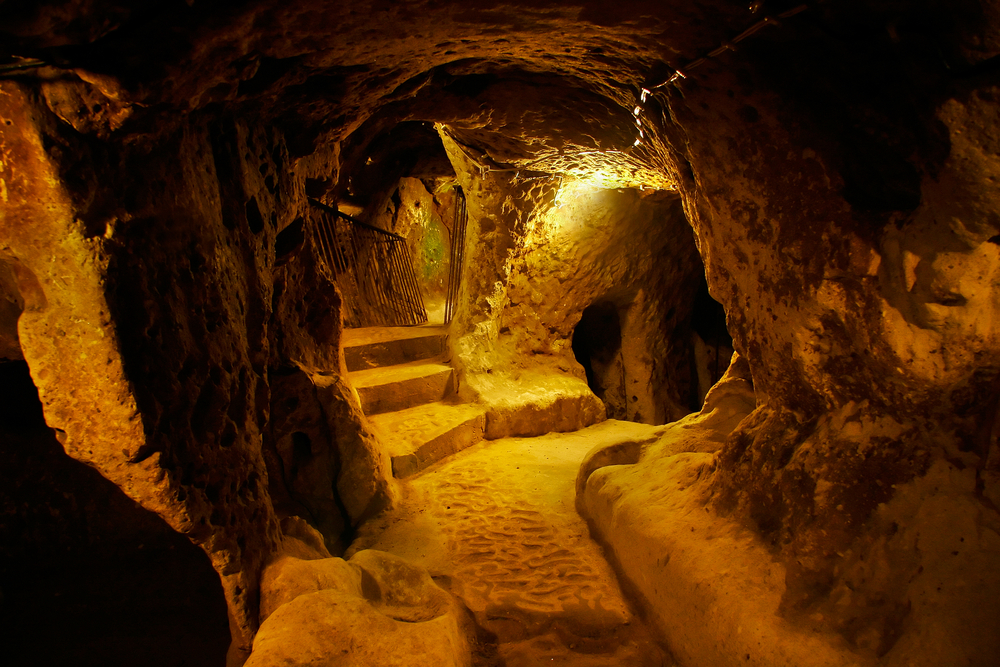 |
| A characteristic tunnel of Derinkuyu |
This city found by accident in 1963 was
first built by the Byzantine Empire, the eastern half of the Roman
Empire, where it was used as a protection against Muslim Arabs during
the Arab-Byzantine wars. It extends to a depth of about 200 feet and
is large enough to have sheltered over 20'000 people, with their
livestock and food stores! Characteristic are those round stone doors
that could be moved across the tunnels at strategical points to block
off the way.

Just look at the size of this whole thing! You could imagine an anthill!
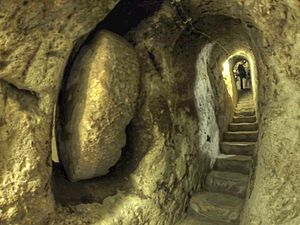
The round door found its use in the novel, however it didn't block off a corridor but was merely used as an entrance door, with a similar opening mechanism found in the Forest Temple as well.
The cellar from Kakariko only has a
fraction of Derinkuyu's size, but I'll keep this underground city in
mind and maybe even include it in a bigger city of Eldin.
Sunday, 14 June 2015
Research for chapter 15 - The power of Sun and Heat
We're in the Eldin Province now, and things are bound to change from the idyllic forest landscape of Ordona and Faron. Not only is the climate different, but the people living there, the resources found as well as traditions and culture that build all around them. I've passed a lot of time doing research for the Province, taking bits and pieces from countries found in our world and creating my own, living and breathing Eldin Province. Here a brief list of points that are mentioned in chapter 15, and how I came to them.
The sun
 In a country where the Goddess Din is worshipped, the sun is bound to play an important role in the landscape as well as the culture of people living there.
The first aspect is the skin colour of the inhabitants. Have you noticed that in the game, and later it is confirmed in Hyrule Historia, Kakariko could be a town sprung out of a western movie? The rock is red, the sun is hot, and a dark-skinned shaman is striding through the streets clad in leather and an earth-coloured dress. That, of course, immediately let me think of Native Americans. This is why I took Native American words to name all new characters:

I didn't put many names to females, but that will be rightened in future chapters. As for Luana, it is not a Native American name, but a name I invented in my other story, The Dolor Mortis Curse, and I decided to take it over for the novel as well.
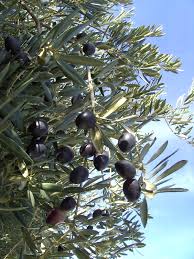
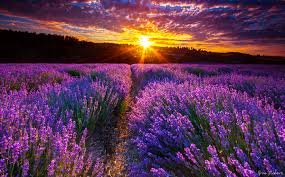 The sun has, obviously, a great influence on the climate. Farmers of Kakariko are based on the southern types of farmers found in our world, growing crop like corn, olives, tomatoes, wine grapes and lavender. The cattle is also different, but I'll develop agriculture while visiting other Eldinian towns. Stay in tune for more references to the south of France, Spain, Italy, the State of Mexico and many more!
In a cultural aspect, the sun also appears in the daily life of our Kakarikans. This is how the idea of the sundial came to be. While other towns with frequent rainfall and cloudy skies have to rely on mechanical clocks, the Eldinians use a technique that is as old as the world. A sundial uses the sun and a pole to cast a shadow on a pre-established clock face. While the sun moves slowly from east to west, the shadow moves too, and a different time is showed.
But sundials do not have to be stationary or attached on walls. Little portable sundials were pretty common in medieval times. I myself own a nice silver sundial composed of a turnable clock face atop which sits a dragon (yeah, I like dragons). The dragon's tail casts a shadow on the clock face, and by subtracting the summertime hour, I get time results that are accurate by half an hour. Other sundials existed, like the ''Peasant's ring'' that uses a hole through which the sun shines. This one is even more accurate.
Under the influence of Twilight, the sun has been shut out of the Province, and this has set multiple problems into motion. Without the sun, crop is not growing, and without crop, people cannot eat. While this seems pretty obvious, there is another very important fact that appears with the lack of sun, which is felt within the people themselves.
When sunlight falls onto human skin, it encourages us to produce vitamin D, an essential substance for us to live. When we are either deliberately evading sunlight, or sunlight is taken from us by natural causes, for example during winter, or when we live in the northern hemisphere where the sun shines less, this vitamin lacks, and multiple troubles arise.
First of all, we are more vulnerable to illnesses. Ever heard of ''Lebertran'', or cod liver? Ever wondered why Northmen swear by this awfully tasting stuff? (believe me, I've been through it in my youth) Well, it is a natural vitamin D supply, and helps building up the immune system and prevent illnesses.
But another very important aftermath of sunlight deprivation is a reduced supply of melatonin and serotonin hormones, which are responsible for our mood. Their absence causes a disruption in our internal clock, which controls our natural waking and sleeping pattern. Renado and all the other Kakarikans feel this by entering a state of permanent gloom, depression even. And I can confirm this: when I am working outside in sunlight, I'm way happier as when I'm working on a cloudy day. This is also the reason why Africans tend to be happier and wear the biggest smile on their face.
This is also the reason why Luana makes Helaku a Saint John's wort tea. This phenomenous plant is widely known as a natural antidepressant. I've looked it up on wikipedia, and this is what I got:
"St. John's wort (SJW), similarly to other herbs, contains a whole host
of different chemical constituents that may be pertinent to its
therapeutic effects. Hyperforin and adhyperforin, two phloroglucinol constituents of SJW, are TRPC6 receptor agonist and, consequently, they induce noncompetitive reuptake inhibition of monoamines (specifically, dopamine, norepinephrine, and serotonin), GABA, and glutamate when they activate this receptor. It inhibits reuptake of these neurotransmitters by increasing intracellular sodium ion concentrations. Moreover, SJW is known to downregulate the β1 adrenoceptor and upregulate postsynaptic 5-HT1A and 5-HT2A receptors, both of which are a type of serotonin receptor. Other compounds may also play a role in SJW's antidepressant effects such compounds include: oligomeric procyanidines, flavonoids (quercetin), hypericin, and pseudohypericin."
https://en.wikipedia.org/wiki/Hypericum_perforatum#Medical_uses
Blah blah blah ... As clear as springwater, no? Basically, it helps with depressions. I didn't understand how or why, but it helps. xD
All in all, sunlight is a major factor in the Eldin Province. Knowing this, I'll make sure to spur Link in collecting Eldin's tears of Light so that this disaster has a swift end. ;)
Vulcanic activity
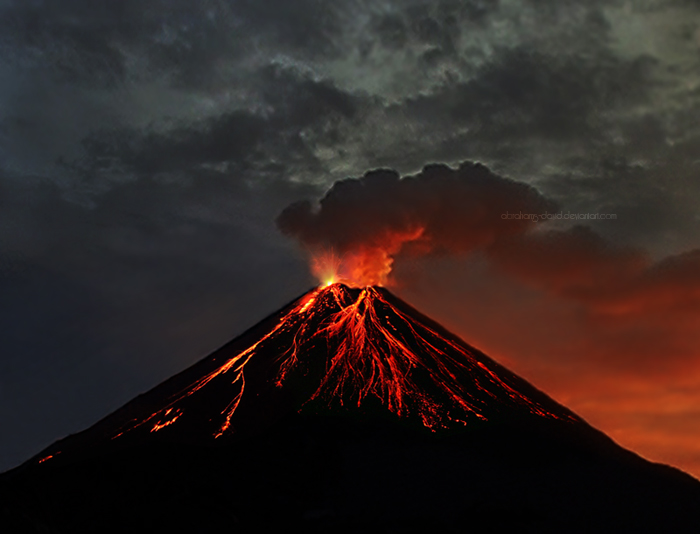
Death Mountain is a volcano, as you probably know from previous Zelda games as well as this one. But a volcano isn't just filled with lava and erupts from time to time when you're unlucky. Around a volcano, an entire microcosm of activities are induced by the constant heat supply. Here a few of them that have been used in chapter 15:
Geysers: those columns of boiling water shooting out of the earth at a given time are a rare, natural phenomenon occurring only at a few locations on Earth. The diagram shows how a pocket of magma underneath the pool of water heats this one up. Hot water takes up more space than cool water, and the pressure arising in the groundwater pool causes a powerful jet of water and steam to shoot out a hole in the ground. This is what causes a geyser.
Due to the fact that geysers are present everywhere on Death Mountain when Link travels there, I decided to include them in my novel as well, even if under slightly more realistic conditions. And by doing so, I got the hot spring in Kakariko as bonus in my volcanic all inclusive pack! Yay!
Fumaroles: a fumarole is an opening in the ground, much like the vent shown in the geyser diagram, that emits steam - from heated water - and gases such as carbon dioxide (CO2), sulphur dioxide (SO2), hydrogen chloride (HCl) and hydrogen sulphide (H2S, very poisonous!).
It is in those fumaroles that sulphur (or sulfur) can be found. It has a characteristic yellow colour and smells of rotten eggs. This putrid smell, by the way, comes from bacteria that break down the organic matter in eggs, swamps and sewers, and thus create a small quantity of hydrogen sulphide in them that carries this smell. I've been forced to smell it for days on end on my hands when I opened a rotten egg while making cookies for Christmas, and believe me, it was an awful experience...
This was it for this chapter, folks! Till next time! Oh, and once the battery of my granddad's camera is full, I'll take a picture of my dragon sundial and post it here.
The sun
In a country where the Goddess Din is worshipped, the sun is bound to play an important role in the landscape as well as the culture of people living there.The first aspect is the skin colour of the inhabitants. Have you noticed that in the game, and later it is confirmed in Hyrule Historia, Kakariko could be a town sprung out of a western movie? The rock is red, the sun is hot, and a dark-skinned shaman is striding through the streets clad in leather and an earth-coloured dress. That, of course, immediately let me think of Native Americans. This is why I took Native American words to name all new characters:
- ''Old'' Abequa => stays at home
- Chitto => brave
- Etu => the sun
- Helaku => full of sun
- Len => lion
- Kele => sparrow
- Kay (the builder, briefly mentioned) => glory
I didn't put many names to females, but that will be rightened in future chapters. As for Luana, it is not a Native American name, but a name I invented in my other story, The Dolor Mortis Curse, and I decided to take it over for the novel as well.
 |
| Sundial on the wall |
In a cultural aspect, the sun also appears in the daily life of our Kakarikans. This is how the idea of the sundial came to be. While other towns with frequent rainfall and cloudy skies have to rely on mechanical clocks, the Eldinians use a technique that is as old as the world. A sundial uses the sun and a pole to cast a shadow on a pre-established clock face. While the sun moves slowly from east to west, the shadow moves too, and a different time is showed.
| Peasant's Ring, www.hornschnitzer.eu |
Under the influence of Twilight, the sun has been shut out of the Province, and this has set multiple problems into motion. Without the sun, crop is not growing, and without crop, people cannot eat. While this seems pretty obvious, there is another very important fact that appears with the lack of sun, which is felt within the people themselves.
 |
| Cod liver, yuck! |
First of all, we are more vulnerable to illnesses. Ever heard of ''Lebertran'', or cod liver? Ever wondered why Northmen swear by this awfully tasting stuff? (believe me, I've been through it in my youth) Well, it is a natural vitamin D supply, and helps building up the immune system and prevent illnesses.
 |
| vi.sualize.us |
But another very important aftermath of sunlight deprivation is a reduced supply of melatonin and serotonin hormones, which are responsible for our mood. Their absence causes a disruption in our internal clock, which controls our natural waking and sleeping pattern. Renado and all the other Kakarikans feel this by entering a state of permanent gloom, depression even. And I can confirm this: when I am working outside in sunlight, I'm way happier as when I'm working on a cloudy day. This is also the reason why Africans tend to be happier and wear the biggest smile on their face.
This is also the reason why Luana makes Helaku a Saint John's wort tea. This phenomenous plant is widely known as a natural antidepressant. I've looked it up on wikipedia, and this is what I got:
| pilladvised.com |
https://en.wikipedia.org/wiki/Hypericum_perforatum#Medical_uses
Blah blah blah ... As clear as springwater, no? Basically, it helps with depressions. I didn't understand how or why, but it helps. xD
All in all, sunlight is a major factor in the Eldin Province. Knowing this, I'll make sure to spur Link in collecting Eldin's tears of Light so that this disaster has a swift end. ;)
Vulcanic activity
 |
| www.deviantart.com |
 |
| www.eduweb.com |
Geysers: those columns of boiling water shooting out of the earth at a given time are a rare, natural phenomenon occurring only at a few locations on Earth. The diagram shows how a pocket of magma underneath the pool of water heats this one up. Hot water takes up more space than cool water, and the pressure arising in the groundwater pool causes a powerful jet of water and steam to shoot out a hole in the ground. This is what causes a geyser.
Due to the fact that geysers are present everywhere on Death Mountain when Link travels there, I decided to include them in my novel as well, even if under slightly more realistic conditions. And by doing so, I got the hot spring in Kakariko as bonus in my volcanic all inclusive pack! Yay!
 |
| www.rossway.net |
Fumaroles: a fumarole is an opening in the ground, much like the vent shown in the geyser diagram, that emits steam - from heated water - and gases such as carbon dioxide (CO2), sulphur dioxide (SO2), hydrogen chloride (HCl) and hydrogen sulphide (H2S, very poisonous!).
 |
| Sulphur deposit. Source: wikipedia |
It is in those fumaroles that sulphur (or sulfur) can be found. It has a characteristic yellow colour and smells of rotten eggs. This putrid smell, by the way, comes from bacteria that break down the organic matter in eggs, swamps and sewers, and thus create a small quantity of hydrogen sulphide in them that carries this smell. I've been forced to smell it for days on end on my hands when I opened a rotten egg while making cookies for Christmas, and believe me, it was an awful experience...
This was it for this chapter, folks! Till next time! Oh, and once the battery of my granddad's camera is full, I'll take a picture of my dragon sundial and post it here.
Sunday, 26 April 2015
Climate and soils of Hyrule - A literally "basic" way to world build
It's time for some geography! Yay!
 Thinking about the landscape around Kakariko for the next chapter (we're getting to Eldin Province, finally!), I noticed how in the game, the rocks and mountains are of a prominent yellow and orange. Ochre, if I'm correct. But why is it ochre, and why is it the only part of Hyrule having ochre in the game?
I realized that creating a realistic and functioning world implies far more thought than just creating cities and trading systems. Looking at the map I drew while taking TP's world map as model, I saw just how the actual climate of the world affected the landscape and soils. Did you notice that in the middle of the map (from West to East) we have the Desert, Hyrule as well as Kakariko with its ochre? To the south we have Faron Woods (a very densely grown forest) as well as Ordona's plains and mountain, and to the north we have the plains of Northern Lanayru, Eldin and the mountains of Snow Peak and Zora's Domain.
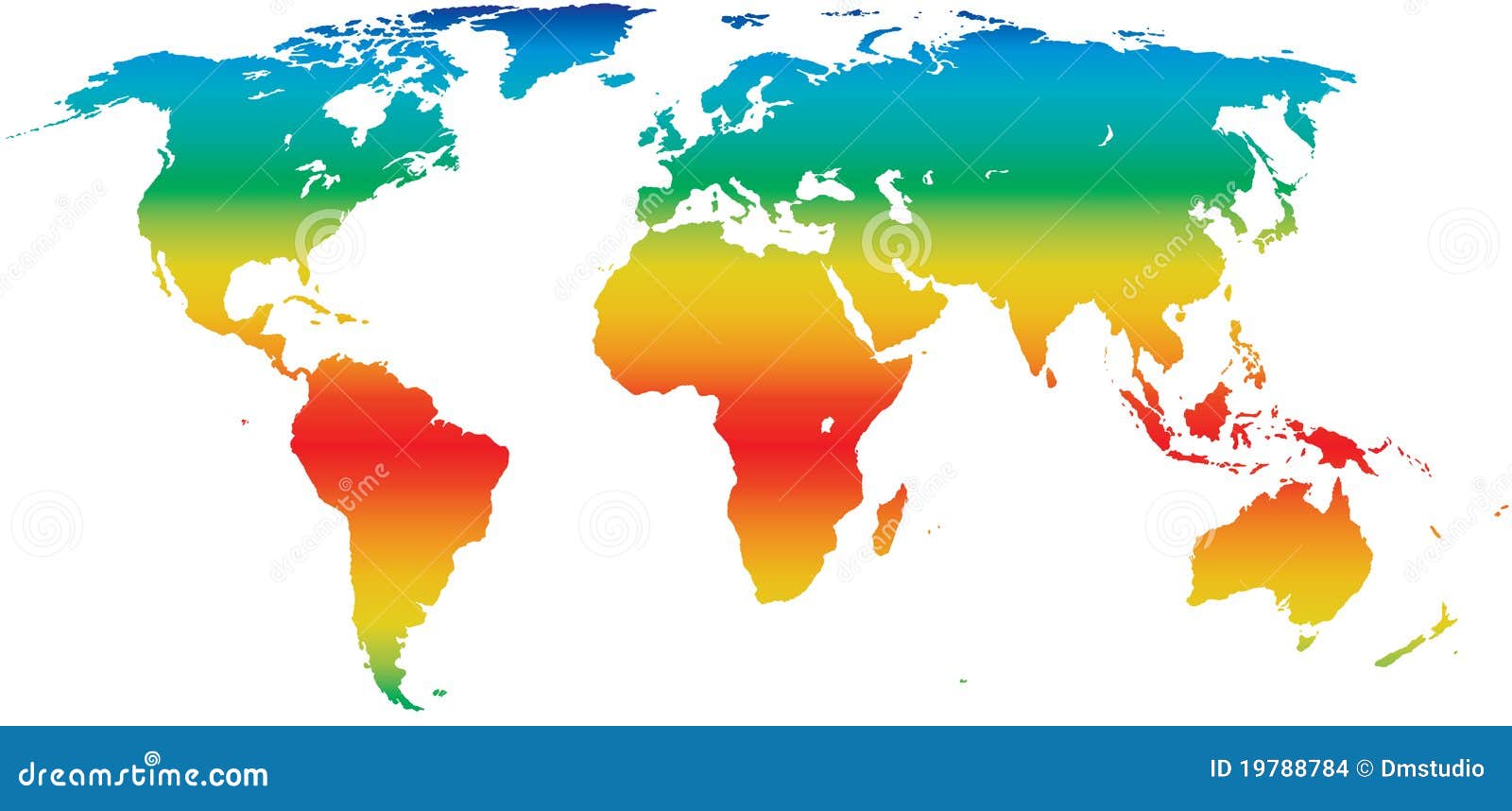
And now let's take a look at our own world, and how the movement of the sun affects different parts of the world.
The red colour shows where the sun is at its nearest to our planet, namely in the middle of Africa (Sahara), the northern part of South America (Amazon Basin) as well as the Isles of Malaysia, Papua New Guinea, Indonesia and North Australia (Sandy Desert, Great Victoria Desert). This invisible line is called the equator. As a result, it is very hot there (obviously). If we move north and south, we see how the colours gradually get colder, moving from yellow to green and to blue.
 I decided to try out the same on the map of Hyrule. This is what came out. The red shows the warmer climate, the green the temperate climate, and the blue the colder climate.
Now I'm not entirely sure if this could work, since the planet on which Hyrule is situated would be much smaller than our world, but it gives me a good idea about the temperatures found in the different provinces, and how those can affect both the landscapes as well as how the people live in general.
Just to have said it once: this map does not take into accound the altitudes but merely at which distance the sun is to the surface. Taking the mountains and altitudes into account, I may be able to change the climate of certain regions, but only to a limited span. I could say for example that Hyrule is a plateau situated higher than Kakariko, which would result in it to be cooler than the Eldin Province. The Desert would be lower than Hyrule, and thus much warmer.
But details are for another time. There is still the question about the ochre left unanswered, so let's have a look at the different soils found in Hyrule.
Soil distribution: Eldin Province
Ochre, which I came across in the Provence while on vacation, is a highly ferruginous sandy earth that gets its orange, reddish colour from weathered limonite, which next to hematite is the principal iron ore. Limonite is commonly known as iron oxide (FeO), or rust, hence the reddish colour. This is a very important bit of information, because if limonite is found around Kakariko, then it is only logical that limonite can be mined on Death Mountain. The first source of iron.
This leads to the soil found in the Eldin Province. While surfing through Wikipedia, I found a very interesting page with the different soil types found in our world. If you didn't already know this, let me tell you that no soil is like the other. Soils found in northern Russia are very different to soils found around the Mediterranean Sea. This is not only because of the climate differences, but because of a ton of other facts like erosion, water occurance, altitude, weather etc. Taking the climate (Mediterranean, see map) and nature of the soil (high limonite occurance) into account, I found the perfect soil for the Eldin Province.
Terra rossa*, Italian for "red soil", is a type of red clay soil produced by the weathering of limestone. When limestone weathers, the clay contained in the rocks is left behind, along with any other non-soluble rock material. Under oxidizing conditions, when the soils are above the water table, iron oxide (rust) forms in the clay. This gives it a characteristic red to orange colour. Terra rossa is typically found in regions with a Mediterranean climate.
Althought poor in humus (soils rich in humus are considered very fertile, poor in humus less fertile), this soil can be quite fertile if watered enough.
Compared to most clay soils, terra rossa has surprisingly good drainage characteristics. This makes it a popular soil type for wine production.
*http://en.wikipedia.org/wiki/Terra_rossa_%28soil%29
Okay, Eldin Province done. Now that I know which soil is found there, everything like agriculture, mining and production as well as culture of the people can be built up from there. But this is a topic for another day.
Soil distribution: Hyrule and Lanayru
This was quite easy. I wanted a soil that is not too different from the terra rossa, and which can be found both in cooler as well as hotter regions. There is a second soil which is "related" to terra rossa because it is found in the same category, the Terrae calcis: terra fusca.
Terra fusca, (from the Latin terra, soil, and fuscus, brown) is a soil that developed on limestone, much like the terra rossa, but which is much more fertile because it is rich in humus, and does not have the characteristic red colour of the terra rossa. It is, actually, the very soil which is found in my hometown in Switzerland, in the Swiss Jura.


Okay, it is not New Zealand, but it is still beautiful! As you can see, the limestone found in the soil is used for almost every building, and the landscape is composed of hills and not mountains. Conifers as well as broadleaves grow on this soil. In summer it is very hot, in winter very cold.
Soil distribution: Ordona Province
When standing on a higher mountain in the Ordona Province, this is how I imagine it would look like:


Faron Woods, large and dense, with the Faron River in the background, conifers and mountains behind me.
The perfect soil for conifers and boreal forests is the podzol. Podzols are able to occur on almost any parent material, but are poor soils for agriculture due to the sandy portion, resulting in a low level of moisture and nurtients. In Ordon, I'd say the soil is better for agriculture because of Faron Woods' influence on it, and their soil:
Soil distribution: Faron Woods
First I thought the soil found in the tropical rainforest would be a good one for Faron Woods, but I soon noticed that that one is in fact a very poor soil with almost no nutritiousness to be found. The reason to that is a little complicated to explain, so I'll let you discover that on your own whenever you like.
Instead, I thought that a groundwater soil would be good. In German and French it's called gley, a rich soil with lots of humus and humidity for a dense growth of vegetation. Almost no rocks, as opposed to the terra fusca, are found in this one, but an accumulation of water once you dig deep enough. This soil should be the best one for such a large forest as Faron Woods.
Soil distribution: Great Desert
The soil composing deserts is a soil named regosol. Found mostly in semi-arid and arid areas as well as mountain regions, it can be farmed if sufficiently irrigated, but stays mostly bare.
 What most people think of a desert is this:
 But this is not the only form a desert can take on. The term desert basically denominates a place that is very arid, very dry, with little to no growth of vegetation. It doesn't need to be hot. A desert, like this one, can also be extremely cold.
So, with the question of the different soils in Hyrule answered, it's time to build up the culture, agriculture, vegetation and animal life. This will be fun!
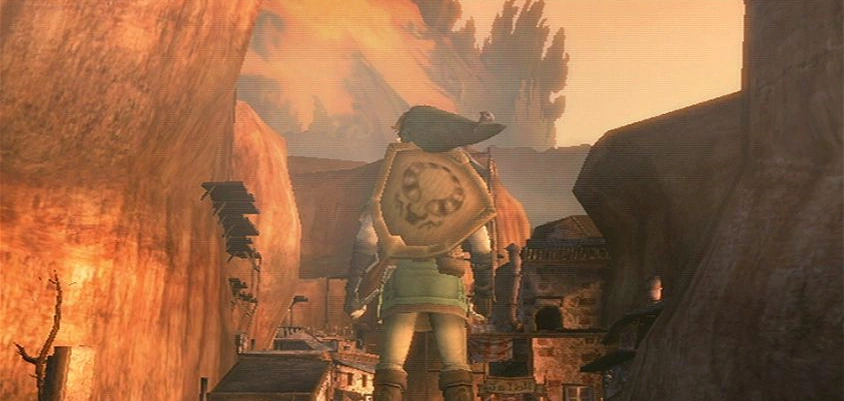 Thinking about the landscape around Kakariko for the next chapter (we're getting to Eldin Province, finally!), I noticed how in the game, the rocks and mountains are of a prominent yellow and orange. Ochre, if I'm correct. But why is it ochre, and why is it the only part of Hyrule having ochre in the game?
I realized that creating a realistic and functioning world implies far more thought than just creating cities and trading systems. Looking at the map I drew while taking TP's world map as model, I saw just how the actual climate of the world affected the landscape and soils. Did you notice that in the middle of the map (from West to East) we have the Desert, Hyrule as well as Kakariko with its ochre? To the south we have Faron Woods (a very densely grown forest) as well as Ordona's plains and mountain, and to the north we have the plains of Northern Lanayru, Eldin and the mountains of Snow Peak and Zora's Domain.
 |
| www.dreamstime.com |
The red colour shows where the sun is at its nearest to our planet, namely in the middle of Africa (Sahara), the northern part of South America (Amazon Basin) as well as the Isles of Malaysia, Papua New Guinea, Indonesia and North Australia (Sandy Desert, Great Victoria Desert). This invisible line is called the equator. As a result, it is very hot there (obviously). If we move north and south, we see how the colours gradually get colder, moving from yellow to green and to blue.
I decided to try out the same on the map of Hyrule. This is what came out. The red shows the warmer climate, the green the temperate climate, and the blue the colder climate.Now I'm not entirely sure if this could work, since the planet on which Hyrule is situated would be much smaller than our world, but it gives me a good idea about the temperatures found in the different provinces, and how those can affect both the landscapes as well as how the people live in general.
Just to have said it once: this map does not take into accound the altitudes but merely at which distance the sun is to the surface. Taking the mountains and altitudes into account, I may be able to change the climate of certain regions, but only to a limited span. I could say for example that Hyrule is a plateau situated higher than Kakariko, which would result in it to be cooler than the Eldin Province. The Desert would be lower than Hyrule, and thus much warmer.
But details are for another time. There is still the question about the ochre left unanswered, so let's have a look at the different soils found in Hyrule.
Soil distribution: Eldin Province
 |
| Ochre in the Provence |
This leads to the soil found in the Eldin Province. While surfing through Wikipedia, I found a very interesting page with the different soil types found in our world. If you didn't already know this, let me tell you that no soil is like the other. Soils found in northern Russia are very different to soils found around the Mediterranean Sea. This is not only because of the climate differences, but because of a ton of other facts like erosion, water occurance, altitude, weather etc. Taking the climate (Mediterranean, see map) and nature of the soil (high limonite occurance) into account, I found the perfect soil for the Eldin Province.
 |
| Malvasia vines in Terra Rossa soil, source: Wikipedia |
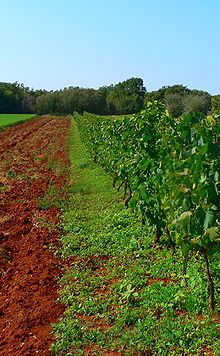
Terra rossa*, Italian for "red soil", is a type of red clay soil produced by the weathering of limestone. When limestone weathers, the clay contained in the rocks is left behind, along with any other non-soluble rock material. Under oxidizing conditions, when the soils are above the water table, iron oxide (rust) forms in the clay. This gives it a characteristic red to orange colour. Terra rossa is typically found in regions with a Mediterranean climate.
Althought poor in humus (soils rich in humus are considered very fertile, poor in humus less fertile), this soil can be quite fertile if watered enough.
Compared to most clay soils, terra rossa has surprisingly good drainage characteristics. This makes it a popular soil type for wine production.
*http://en.wikipedia.org/wiki/Terra_rossa_%28soil%29
Okay, Eldin Province done. Now that I know which soil is found there, everything like agriculture, mining and production as well as culture of the people can be built up from there. But this is a topic for another day.
 |
| Terra fusca, source: www.bildarchiv-boden.de |
Soil distribution: Hyrule and Lanayru
This was quite easy. I wanted a soil that is not too different from the terra rossa, and which can be found both in cooler as well as hotter regions. There is a second soil which is "related" to terra rossa because it is found in the same category, the Terrae calcis: terra fusca.
Terra fusca, (from the Latin terra, soil, and fuscus, brown) is a soil that developed on limestone, much like the terra rossa, but which is much more fertile because it is rich in humus, and does not have the characteristic red colour of the terra rossa. It is, actually, the very soil which is found in my hometown in Switzerland, in the Swiss Jura.


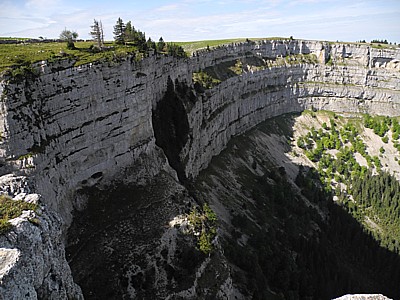
Okay, it is not New Zealand, but it is still beautiful! As you can see, the limestone found in the soil is used for almost every building, and the landscape is composed of hills and not mountains. Conifers as well as broadleaves grow on this soil. In summer it is very hot, in winter very cold.
Soil distribution: Ordona Province
When standing on a higher mountain in the Ordona Province, this is how I imagine it would look like:
Faron Woods, large and dense, with the Faron River in the background, conifers and mountains behind me.
The perfect soil for conifers and boreal forests is the podzol. Podzols are able to occur on almost any parent material, but are poor soils for agriculture due to the sandy portion, resulting in a low level of moisture and nurtients. In Ordon, I'd say the soil is better for agriculture because of Faron Woods' influence on it, and their soil:
Soil distribution: Faron Woods
 |
| Gley. Source: Wikipedia |
Instead, I thought that a groundwater soil would be good. In German and French it's called gley, a rich soil with lots of humus and humidity for a dense growth of vegetation. Almost no rocks, as opposed to the terra fusca, are found in this one, but an accumulation of water once you dig deep enough. This soil should be the best one for such a large forest as Faron Woods.
Soil distribution: Great Desert
The soil composing deserts is a soil named regosol. Found mostly in semi-arid and arid areas as well as mountain regions, it can be farmed if sufficiently irrigated, but stays mostly bare.
 What most people think of a desert is this:
  But this is not the only form a desert can take on. The term desert basically denominates a place that is very arid, very dry, with little to no growth of vegetation. It doesn't need to be hot. A desert, like this one, can also be extremely cold.
So, with the question of the different soils in Hyrule answered, it's time to build up the culture, agriculture, vegetation and animal life. This will be fun!
Thursday, 29 January 2015
New Cover for Dolor Mortis Curse
I used some time off work to make a new cover for my second story, the Dolor Mortis Curse. It can be found on the page dedicated to the DMC. IT was actually a try of me to draw medieval-like, but I don't know if it really turned out like that. Check it out, and tell me what you think.
By the way, it is not Link that I drew, but the illustration in the leather book depicting a man holding his head tightly with blood everywhere and so forth ...
By the way, it is not Link that I drew, but the illustration in the leather book depicting a man holding his head tightly with blood everywhere and so forth ...
Saturday, 22 November 2014
New Picture Upload
The internet problems solved, my homework is now finally making it to the net. Not in form of a chapter this time, but in form of a picture. Link from my story in my second true Photoshop artwork tries to seduce the watcher with his lovable knowing sideglance ... I can say, it's not perfect, but I'm quite proud of the result!
The picture made it's home in the Sketchbook. Look for it!
The picture made it's home in the Sketchbook. Look for it!
Subscribe to:
Posts (Atom)